



Photos by Mario Gallucci
Interruption of Rest: Amanda Wojick’s Higashiyama Spring
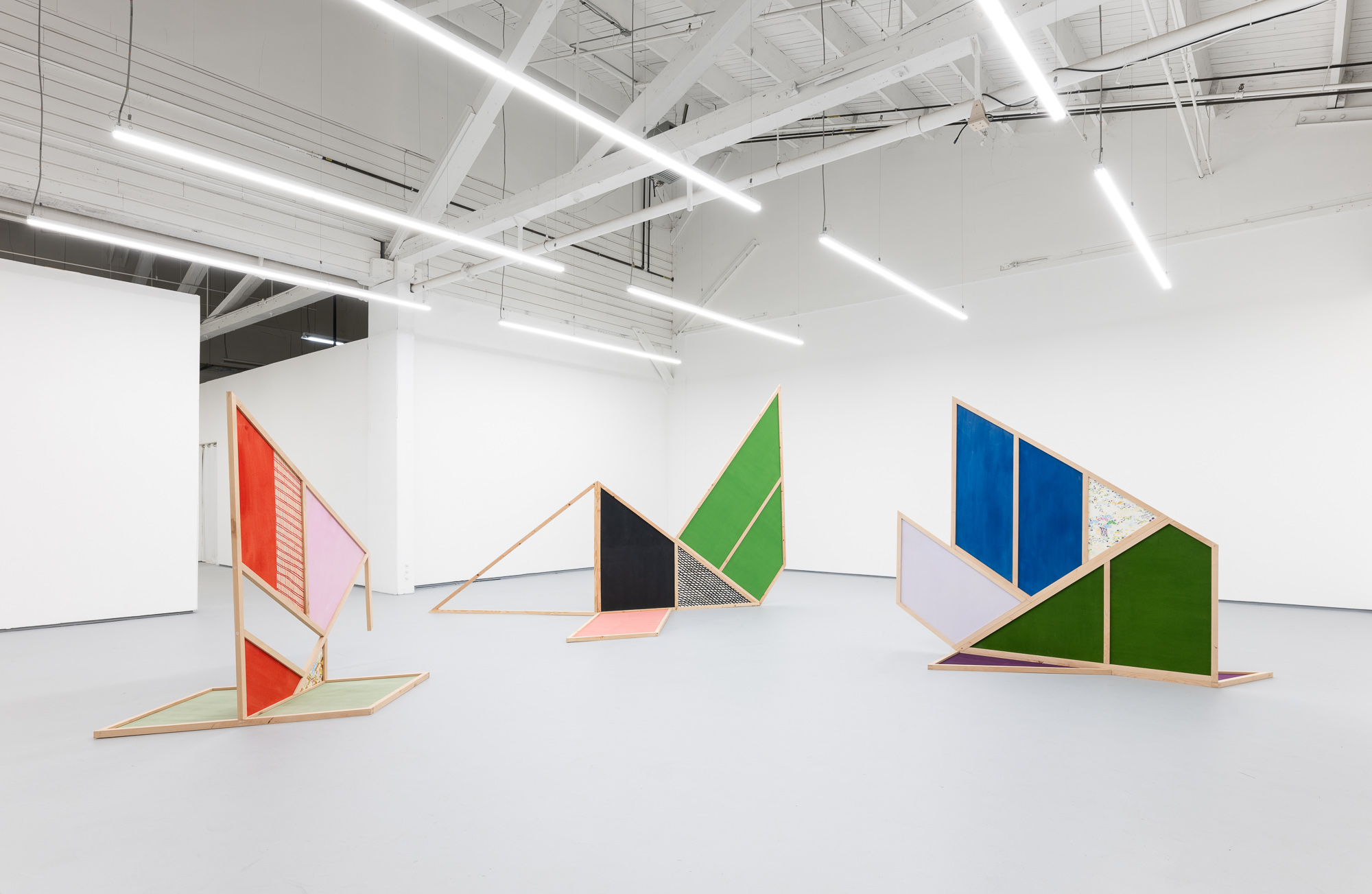
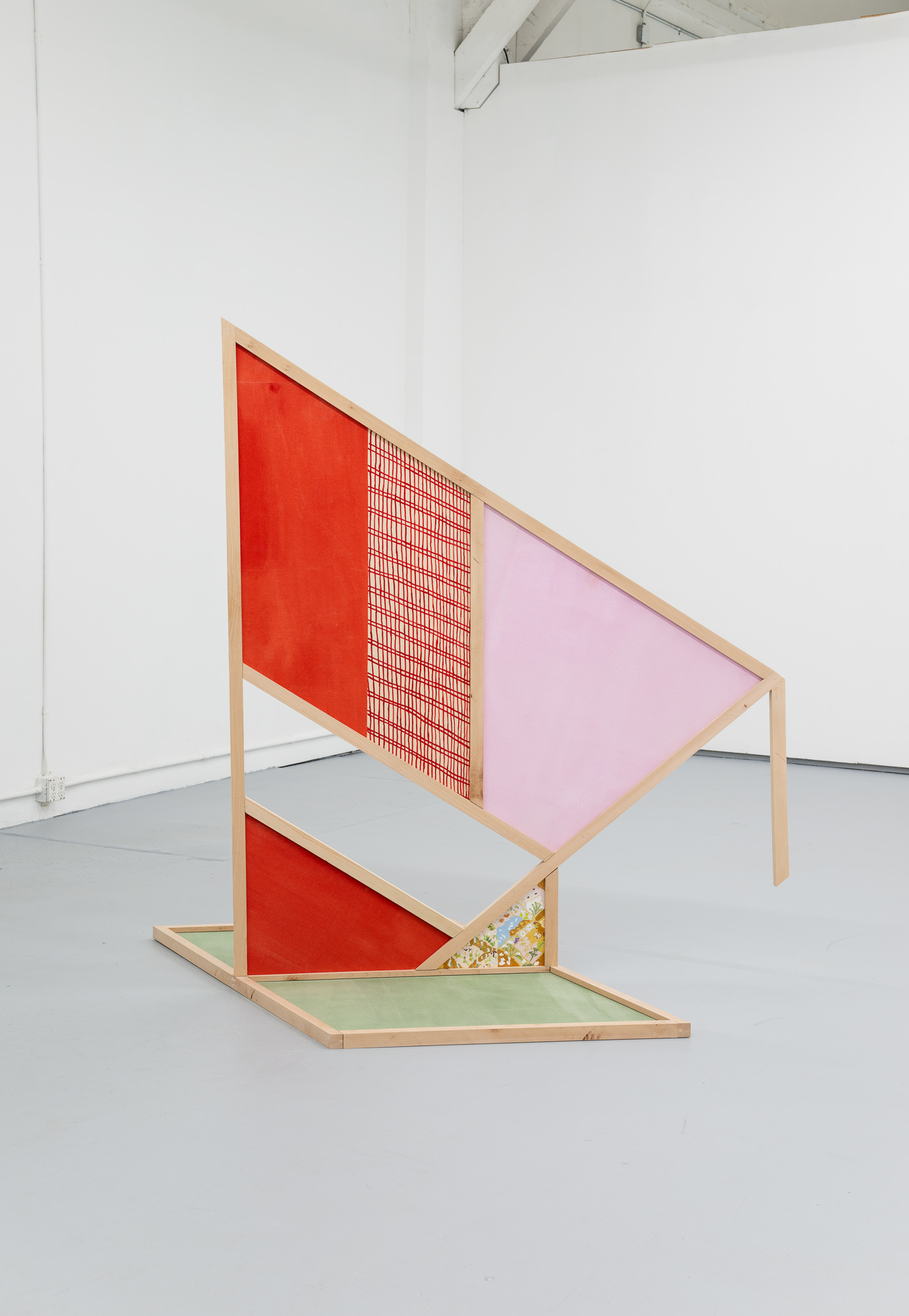
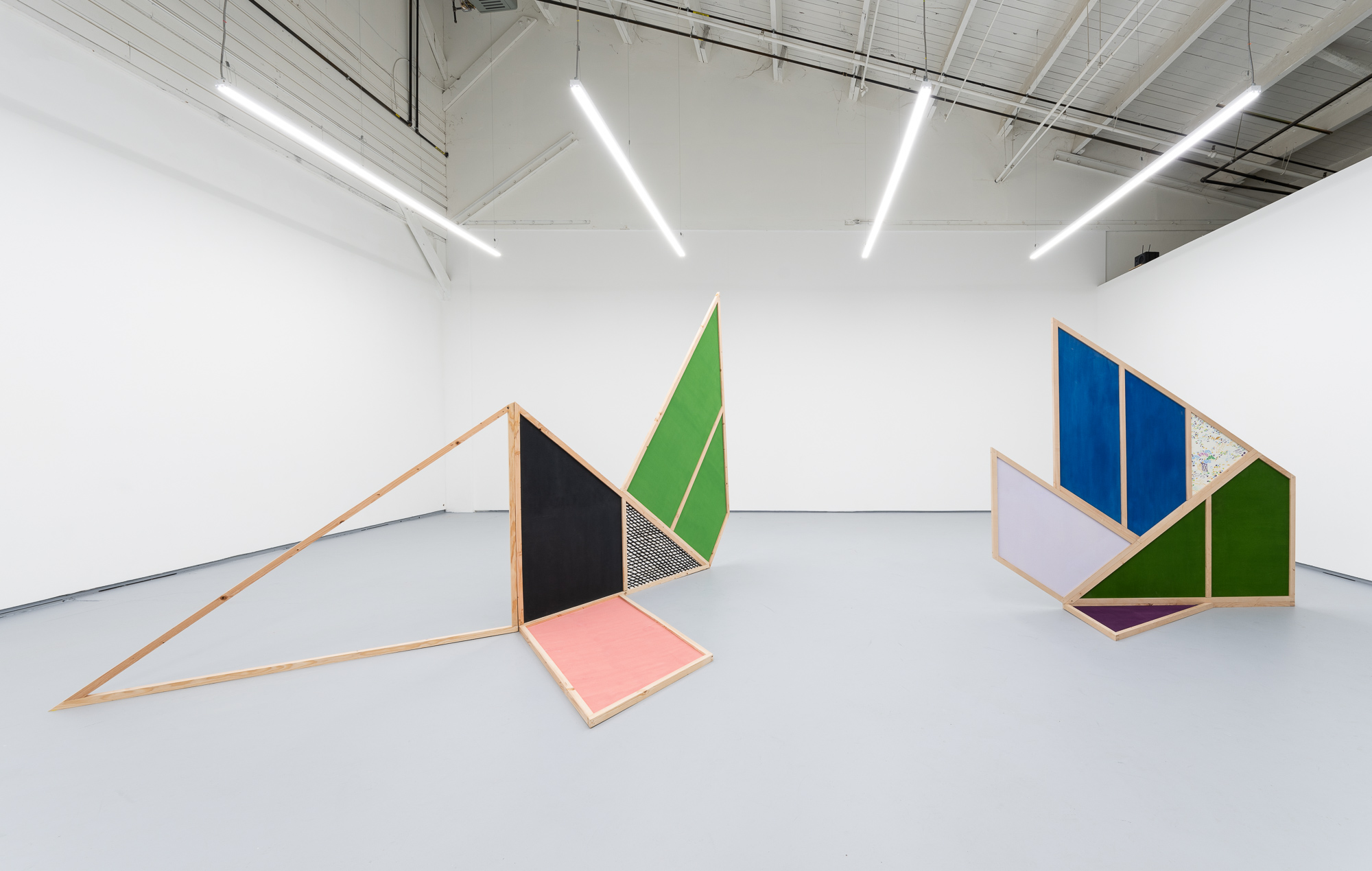
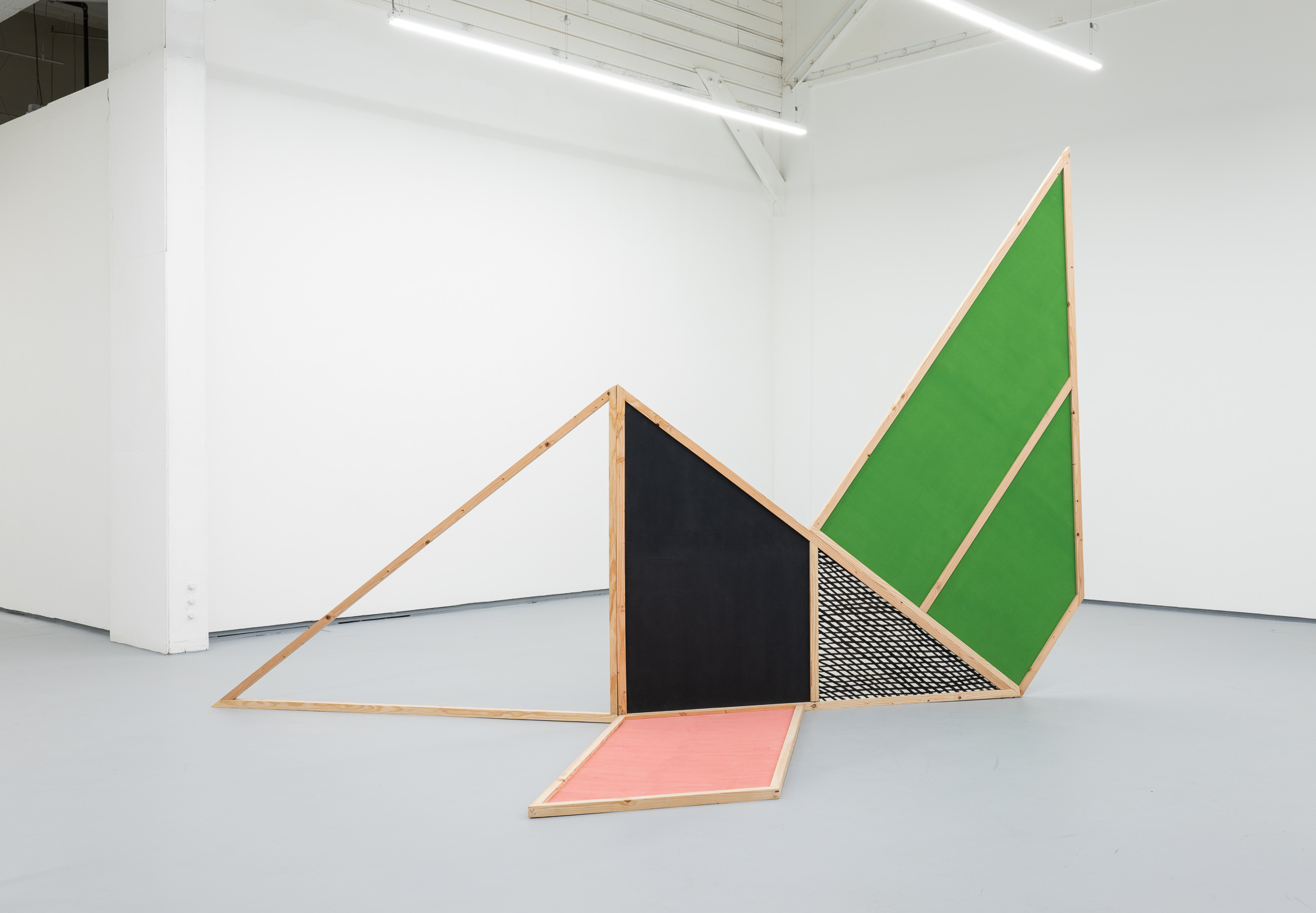
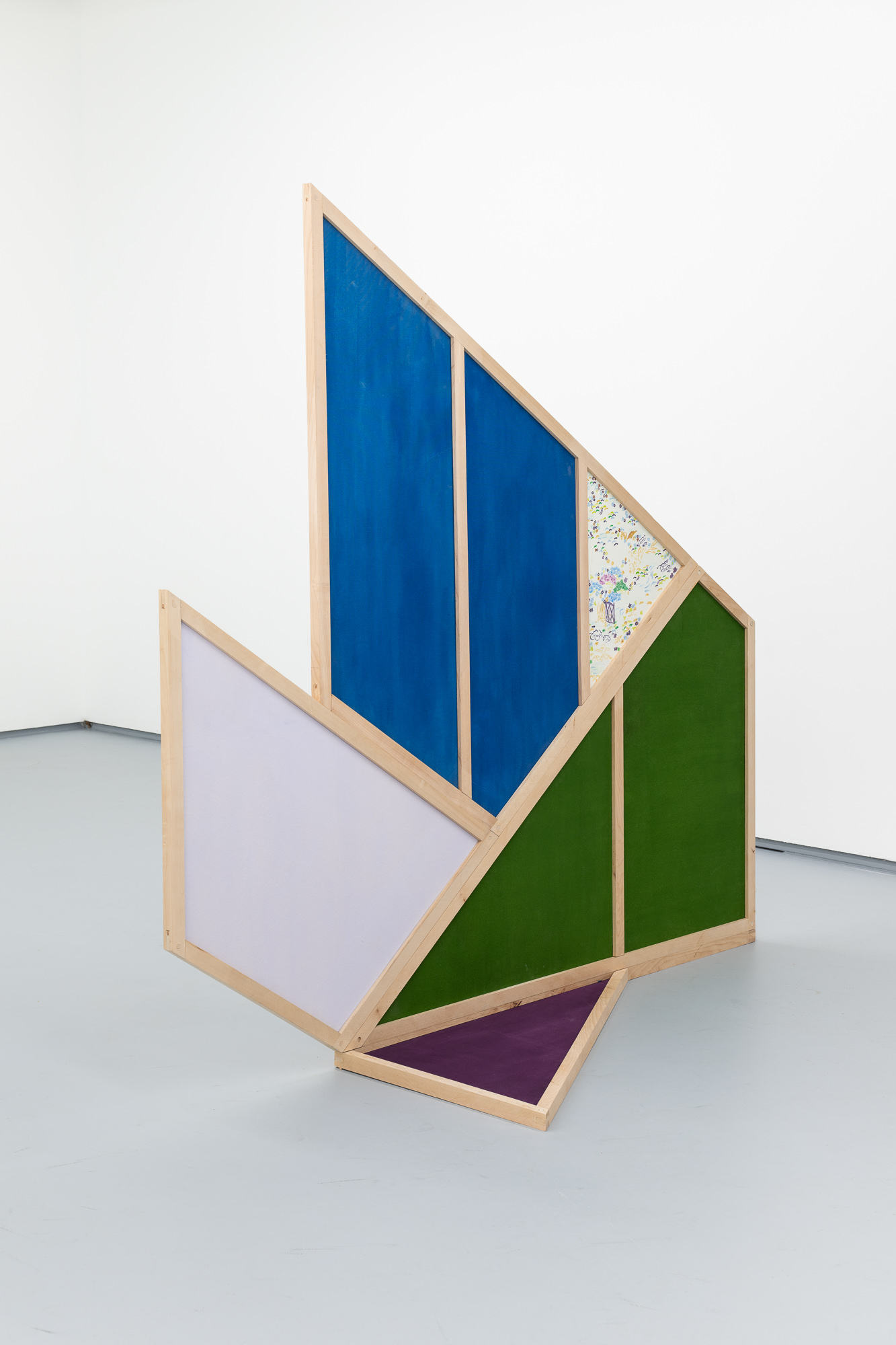
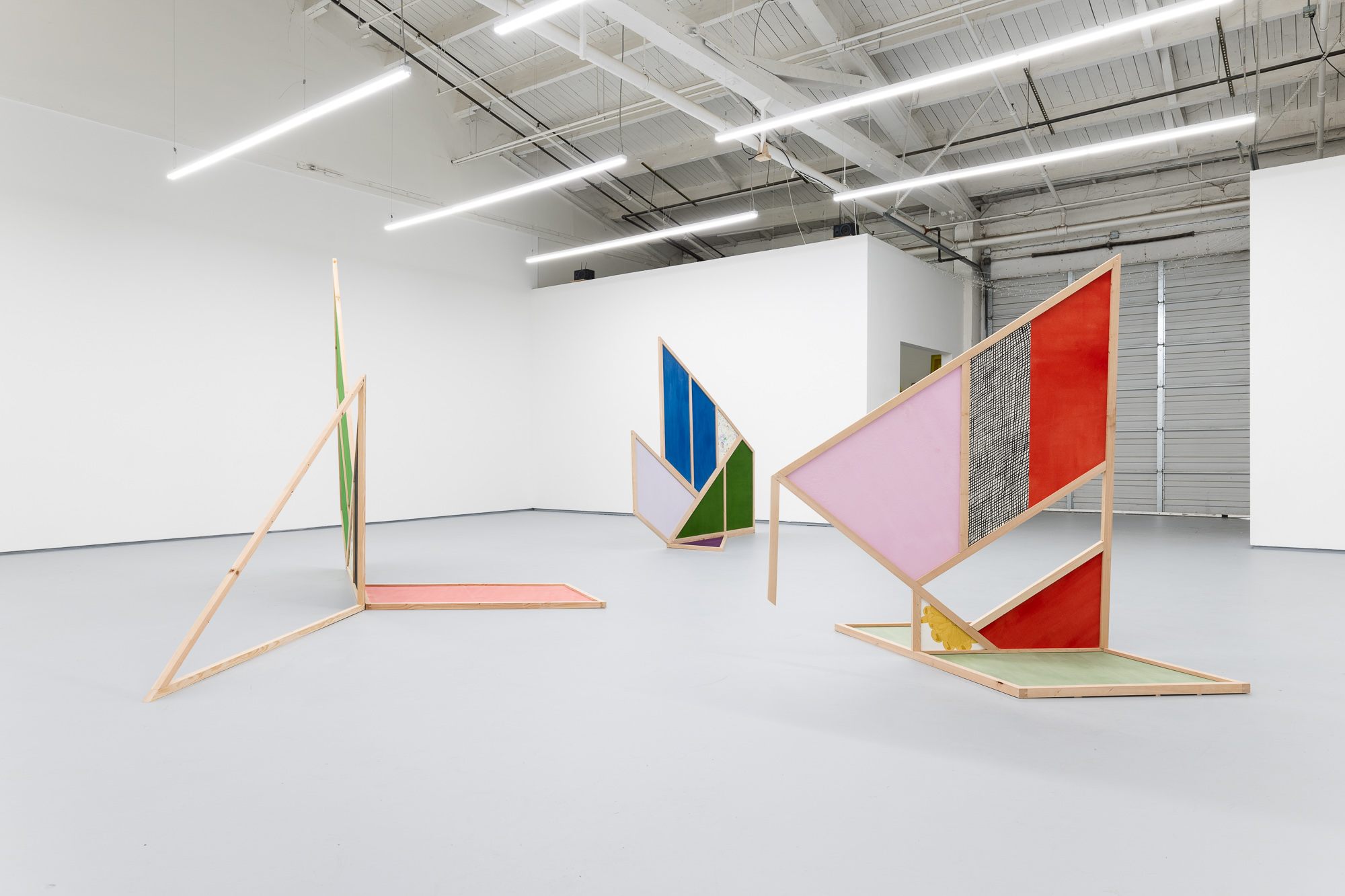
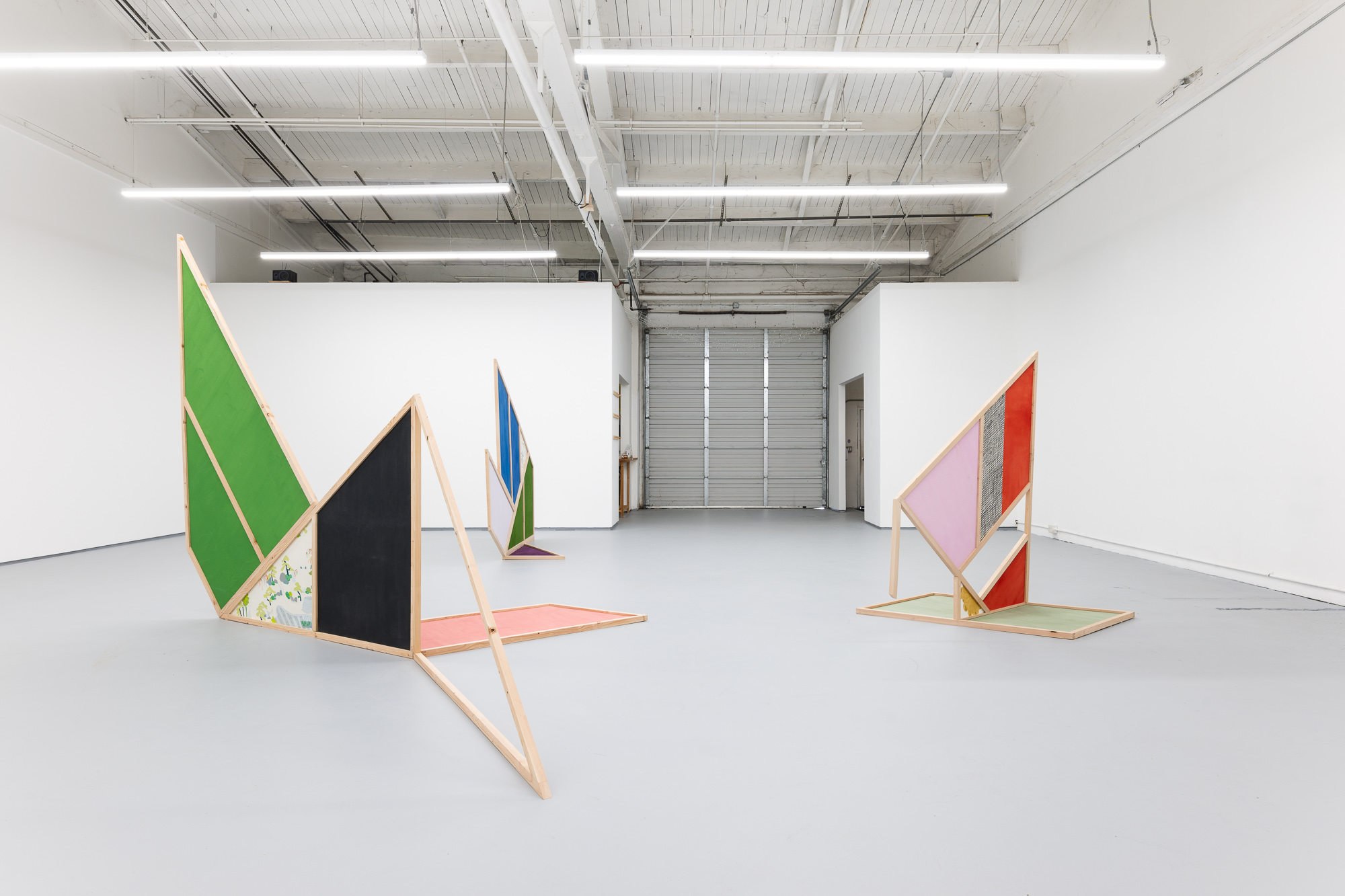
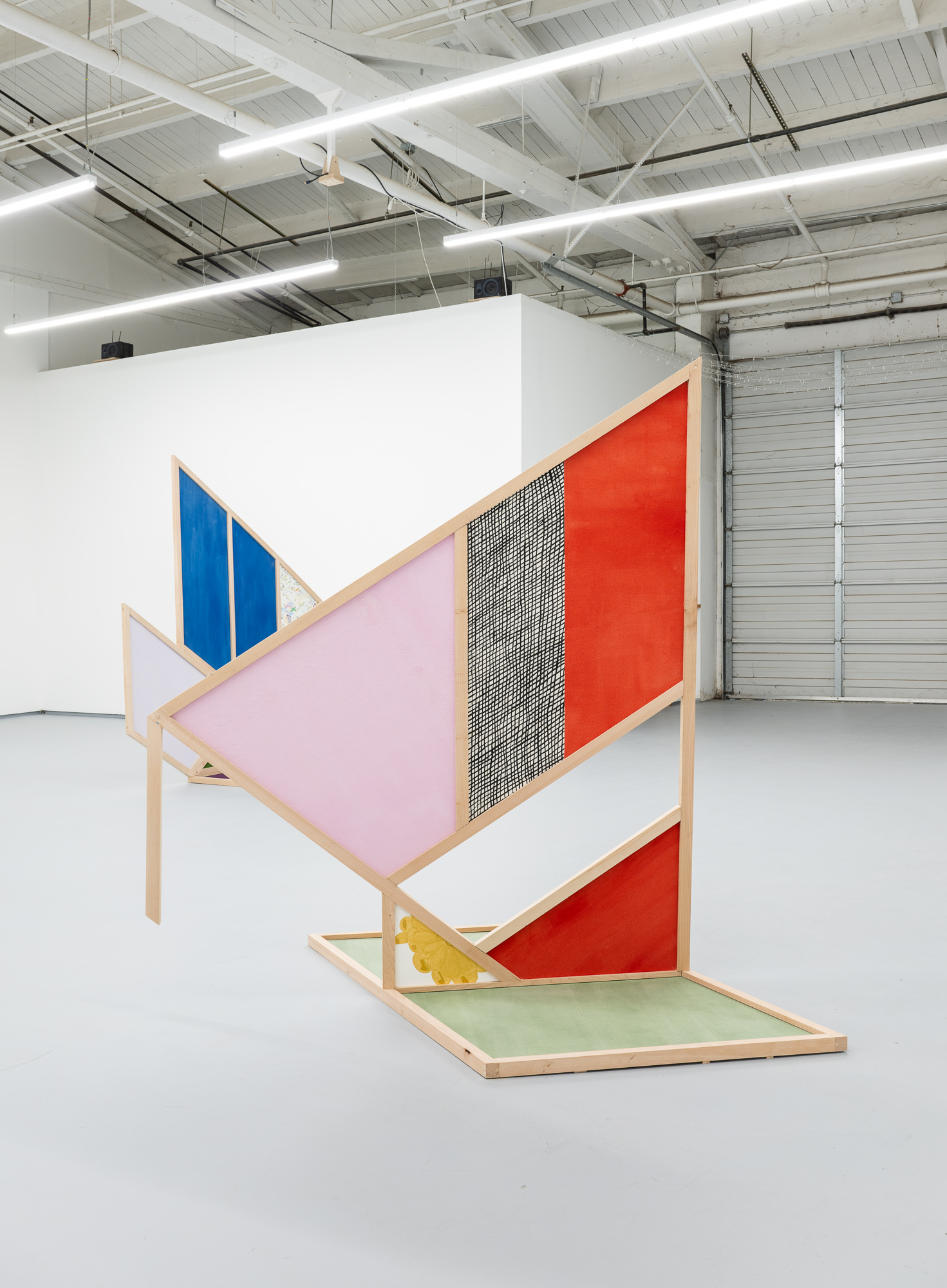
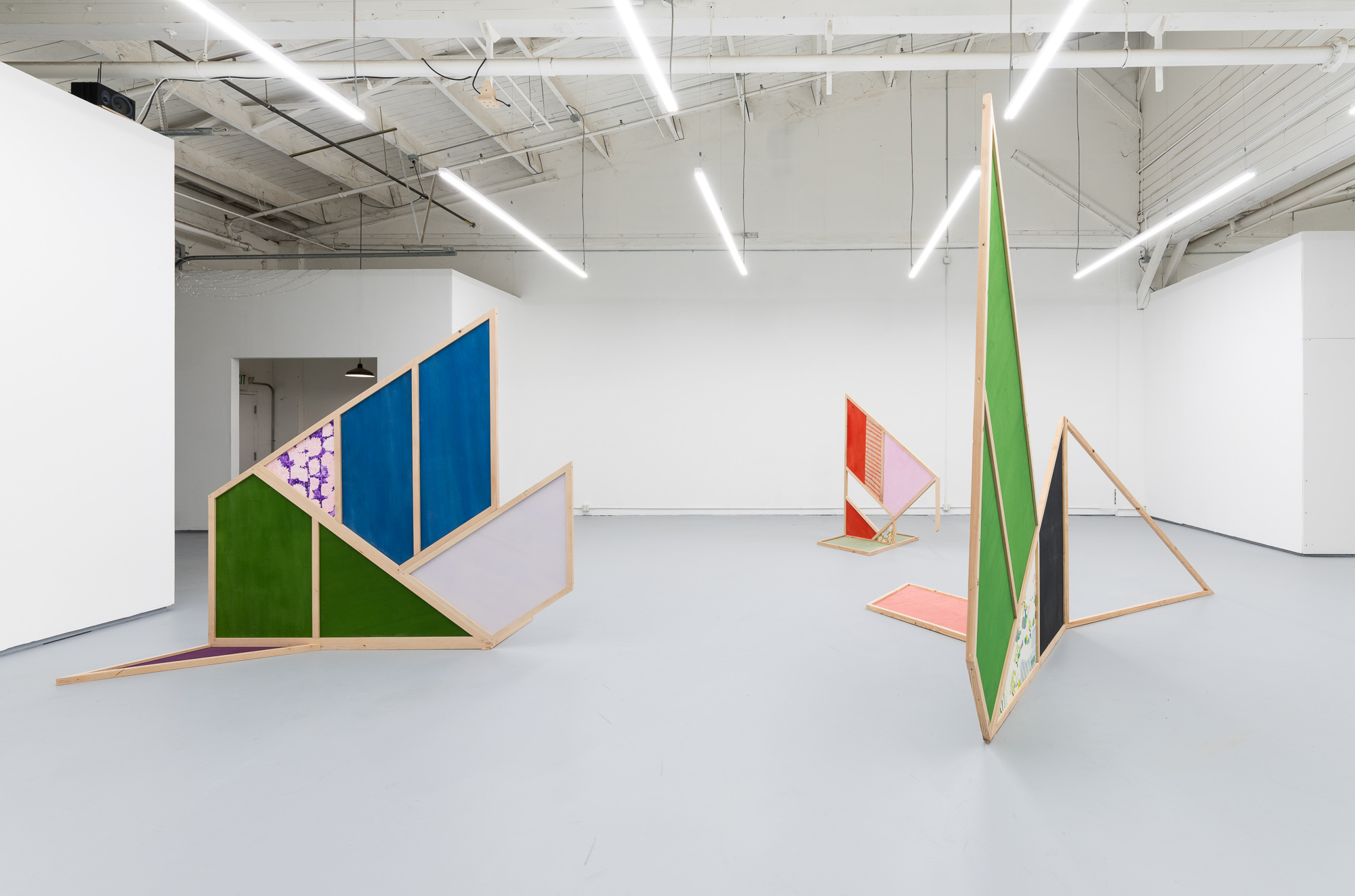
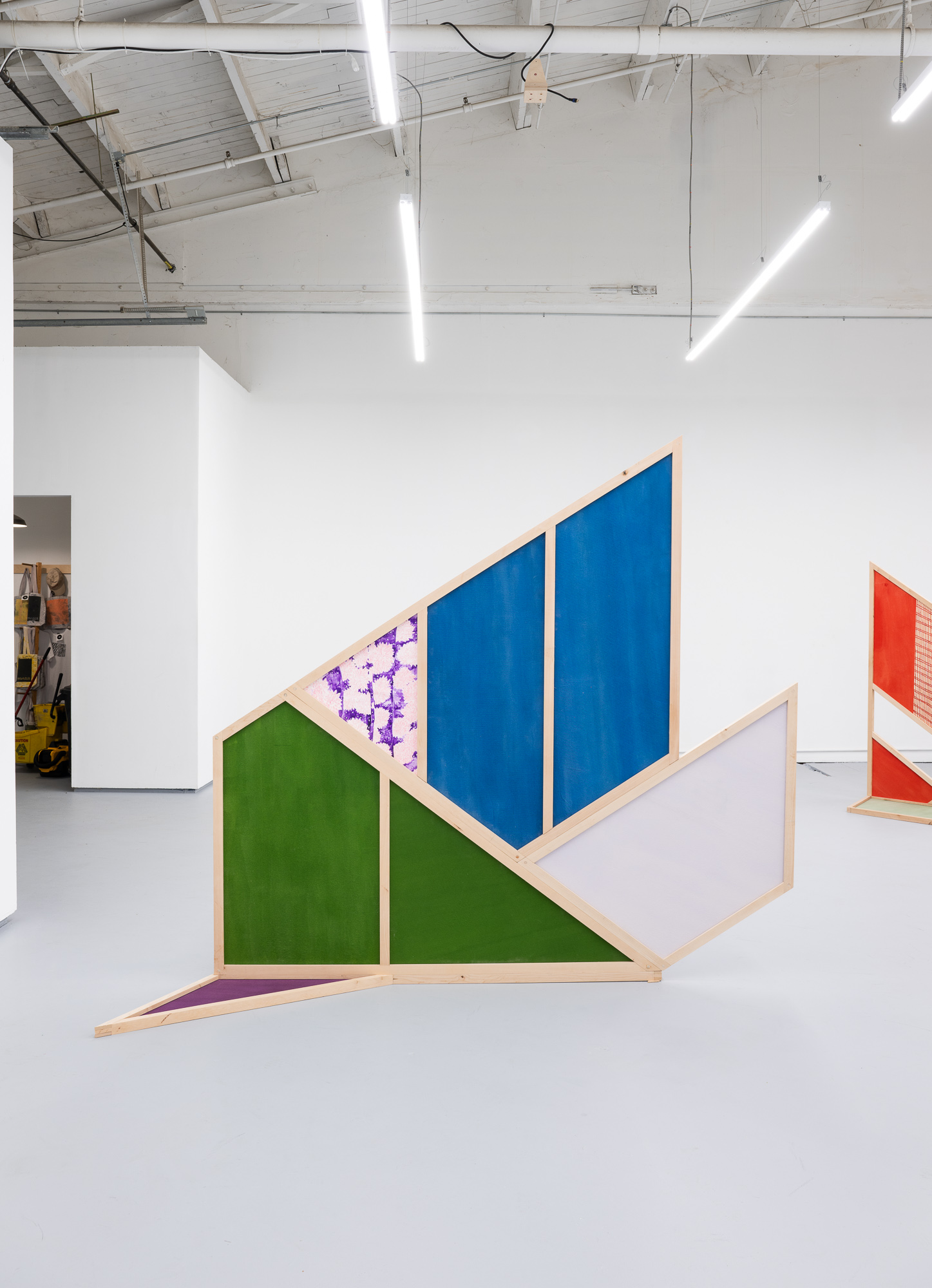
An angular, icy-pink shape slices through space, meeting a black-and-white inky freehand grid, pushed against a flat swath of washy orange. These colorful canvas tarps take shape in variations of triangular and trapezoidal forms that are framed in thin maple beams, then anchored to the floor. These vibrantly saturated freestanding sculptures possess a quiet language like of temporary stage sets after everyone has left.
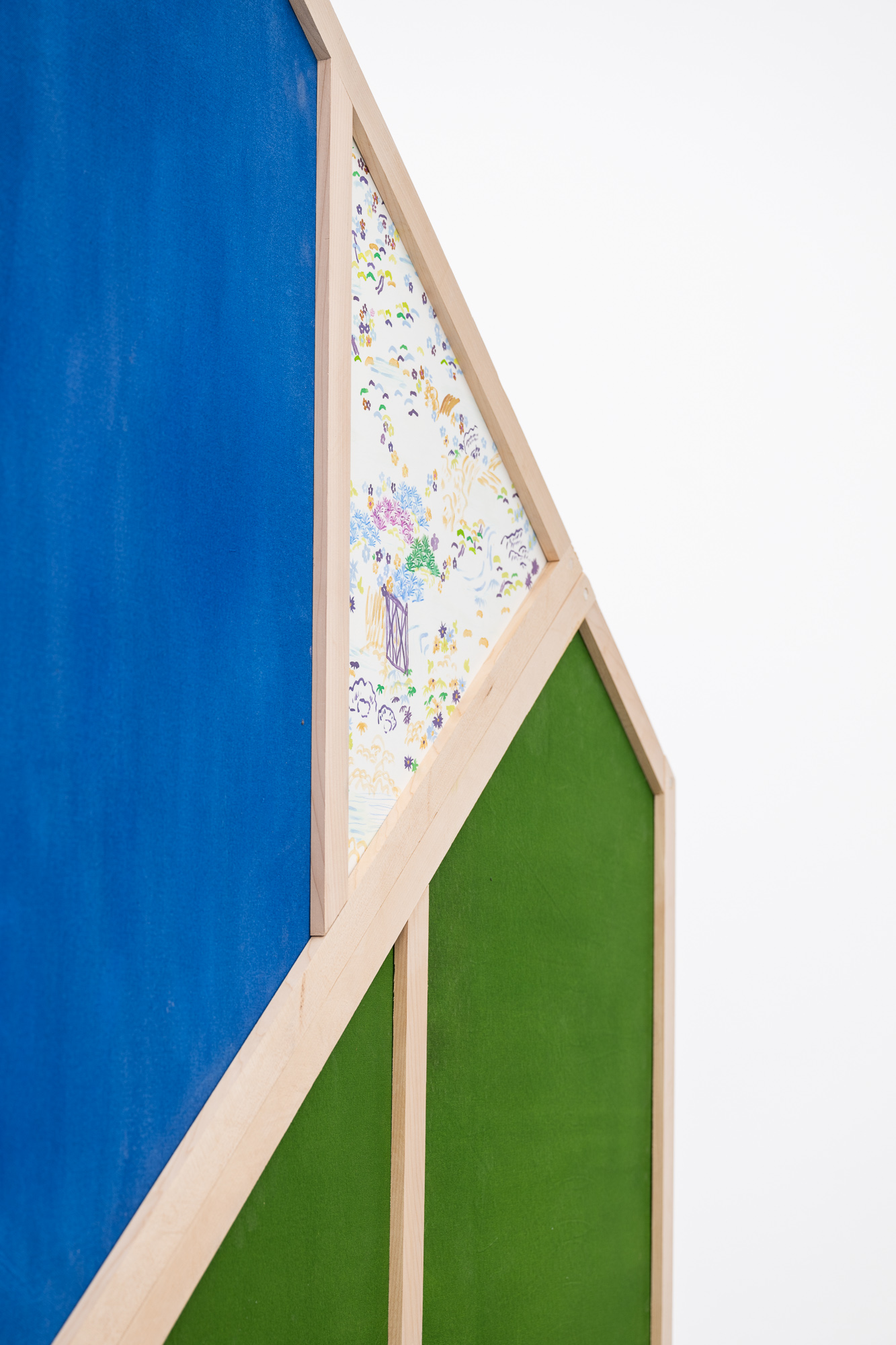
Higashiyama Spring is an exhibition by Oregon artist, Amanda Wojick, at Ditch Projects in Springfield, Oregon. Amanda’s three, large and free-standing structures are not quite sails, not quite partitions, and are slightly larger than the average human body. While they do divide space like partitions, they function more as architectural models. As the viewer, I nest myself in the crooks of the intersecting tarp planes, hiding and seeking. Upon close looking, fragments of miniature landscapes loosely and tenderly painted upon some of the canvas surfaces, imply a shift in distance. With this slight distortion of space, these sculptures prompt me to slow down, pay attention to my body, my inner worlds, our shared worlds, our edges.
Higashiyama is the name of district in Kyoto, Japan, where Amanda’s sculptures were born, while recovering from a severe, almost permanently disabling, leg injury that required four surgeries. Her convalescence informed her understanding of phenomena and thereby informed her art practice.
Temporarily planting herself in Japanese temples by day, then by night working and residing in a 200 year old wooden row house, she observed her verdant, storied surroundings through a (mostly) fixed visual perspective– as a foreigner with very limited mobility. Amanda isn’t Japanese, doesn’t speak Japanese, and this was her first trip to Japan. This slow period of recovery afforded her time to study historic literature, visual phenomena, and relish in the complexities of the world from her vantage point.
Peering through temple openings, Amanda’s environment became cropped and framed with specific information, about scale, about depth. Discrete features within the temple’s meticulous gardens babbled in conversation with streams, distant mountains, baby maple trees emerging from moss; she soaked it all in. In her body, she felt the gardens still held the imagination of their landscape designers from centuries ago, as well as the rogue plant spirits therein.
Through her experiential, relational, and academic research, some of her influences include the rich visual descriptions and highly developed characters of 12th century Japanese novel, The Tale of Genji, by Murasaki Shikibu, which happened to be the first documented novel by a woman. Other influences include the traditional yet provocative dance-drama of Noh theater, which she had the privilege to witness in Japan, in its intensely suspended sense of time.
The influence of traditional Japanese architecture inspired her use of traditional wooden joinery in the maple framing structures of her sculptures. Each beam of her frames are dovetailed with sliding tongue-and-groove connections, creating support through togetherness. Like traditional joinery here, there is no visible hardware. Her angular frames and vertical axes resemble folding or changeable forms, like sliding door panels or perhaps even the body. This series of weight-bearing structures mimicked Amanda’s recent interruption of using her limbs as her body’s own support structure. Through accidental personification, Amanda’s abstract forms came to embody her psychological and physical states of being. In Higashiyama Spring, a tender architecture is constructed—tarps hold themselves like bodies unfolding, resilient and firmly planted.
-Morgan Ritter, June 2025
The Kyoto residency and exhibition were generously supported by Oregon Arts Commission, University of Oregon College of Design, and the University of Oregon Center for Art Research.